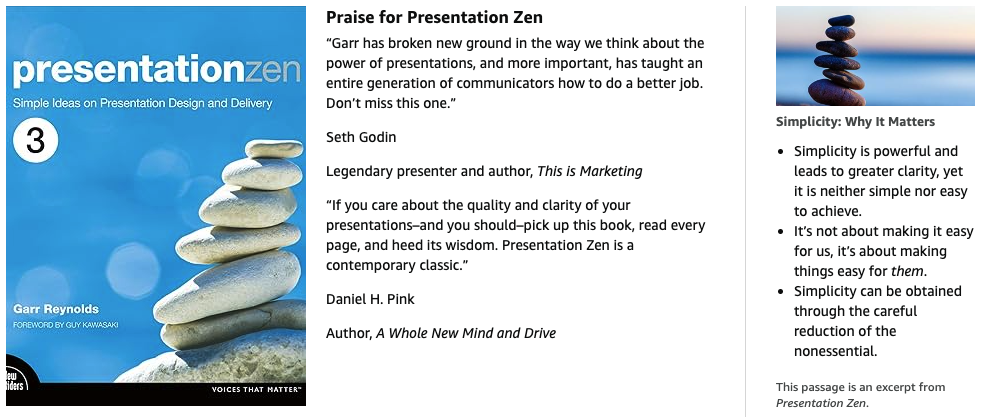
7 Japanese Aesthetic Principles to Change Your Thinking
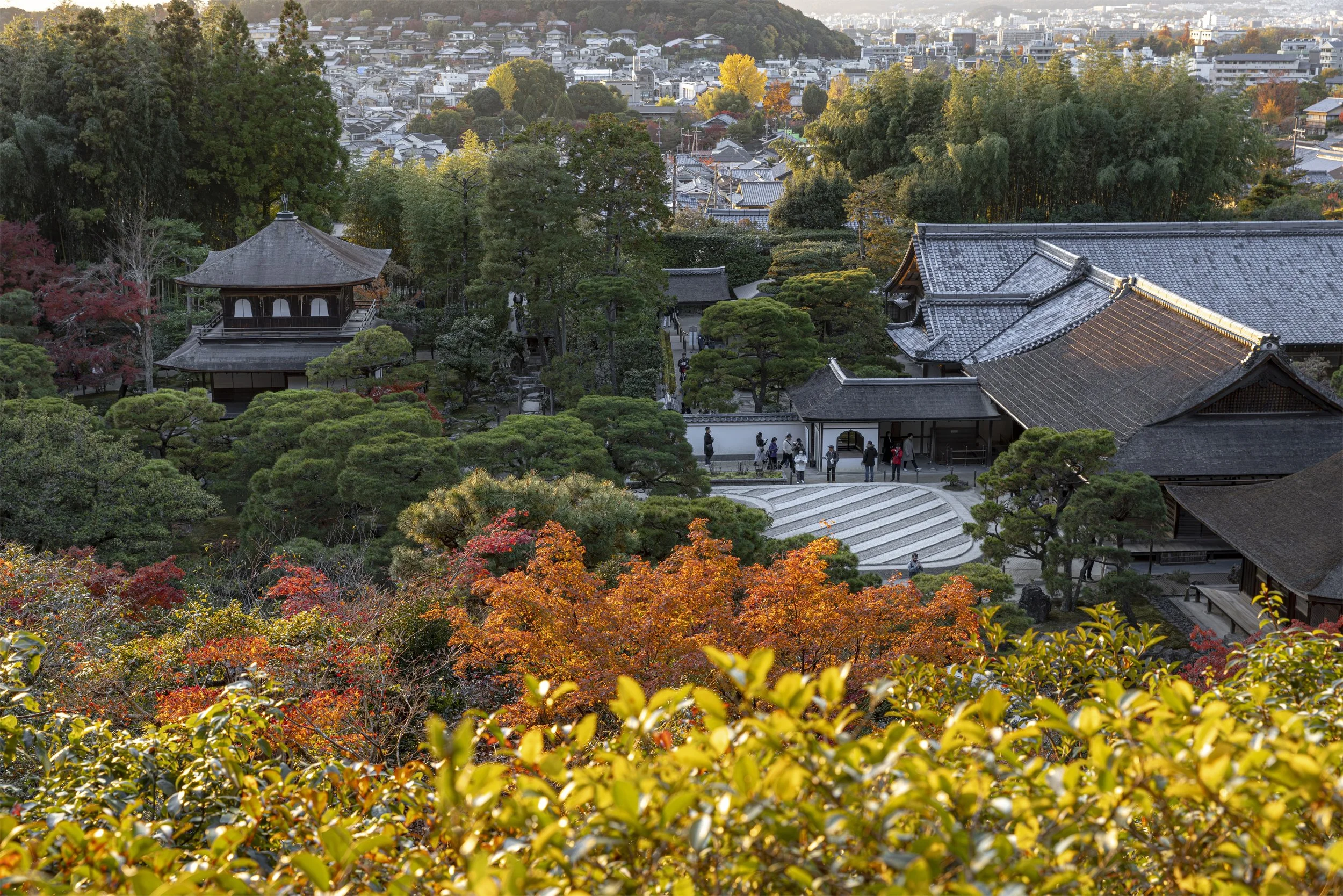
Exposing ourselves to traditional Japanese aesthetic ideas — notions that may seem quite foreign to most of us — is a good exercise in lateral thinking, a term coined by Edward de Bono in 1967. "Lateral Thinking is for changing concepts and perception," says de Bono. Beginning to think about design differently by exploring the tenets of the Zen aesthetic is in the spirit of lateral thinking because it can expose us to a completely new ways of thinking and other creative approaches that challenge our own norms and inspire us to tolerate uncertainty, embrace novel ideas, and look at our own design challenges from another perspective. Looking at concepts from outside our own fields is a good exercise in stretching ourselves and really beginning to think differently about visuals and design in our everyday professional lives. The principles of Zen aesthetics found in the art of the traditional Japanese garden, for example, have many lessons for us, though they are unknown to most people. The principles are interconnected and overlap; it's not possible to simply put the ideas in separate boxes. The late American Japanologist Dr. Patrick Lennox Tierney (a recipient of the Order of the Rising Sun in 2007) wrote several short essays elaborating on the myriad Zen concepts. Below are just seven design-related principles (there are many more) that govern the aesthetics of the Japanese garden and other art forms in Japan. Perhaps they will stimulate your creativity or get you thinking in a new way about your own design-related challenges.
Seven principles for changing your perception

Kanso (簡素) Simplicity. Kanso emphasizes simplicity and the removal of clutter. Things are expressed in a plain, simple, natural manner. Kanso reminds us to think not in terms of decoration but in terms of clarity, a kind of clarity that may be achieved through omission or exclusion of the non-essential.
Applied to presentation design, this could mean using minimal text per slide, removing decorative borders, and relying on clean layouts that highlight one idea at a time. Empty space can support focus and calm and guide the eye. Large, high-quality images can make ideas easier to understand and remember.
In photography and filmmaking, it may mean composing images with fewer subjects and clean, uncluttered backgrounds. Composing in a manner that allows negative space to express balance and focus attention on the main subject.
Fukinsei (不均整) Asymmetry or irregularity. Fukinsei is an aesthetic principle that celebrates asymmetry, irregularity, and imperfection as sources of natural beauty. Unlike many Western design concepts that often prioritize perfect symmetry and perfect balance, Fukinsei embraces unevenness and imbalance as intentional, harmonious qualities. The idea of controlling balance in a composition via irregularity and asymmetry is a central tenet of the Zen aesthetic. The enso ("Zen circle") in brush painting, for example, is often drawn as an incomplete circle, symbolizing the imperfection that is part of existence. In graphic design too asymmetrical balance is a dynamic, beautiful thing. Try looking for (or creating) beauty in balanced asymmetry. Nature itself is full of beauty and harmonious relationships that are asymmetrical yet, in some sense, balanced. This is a dynamic beauty that attracts and engages.
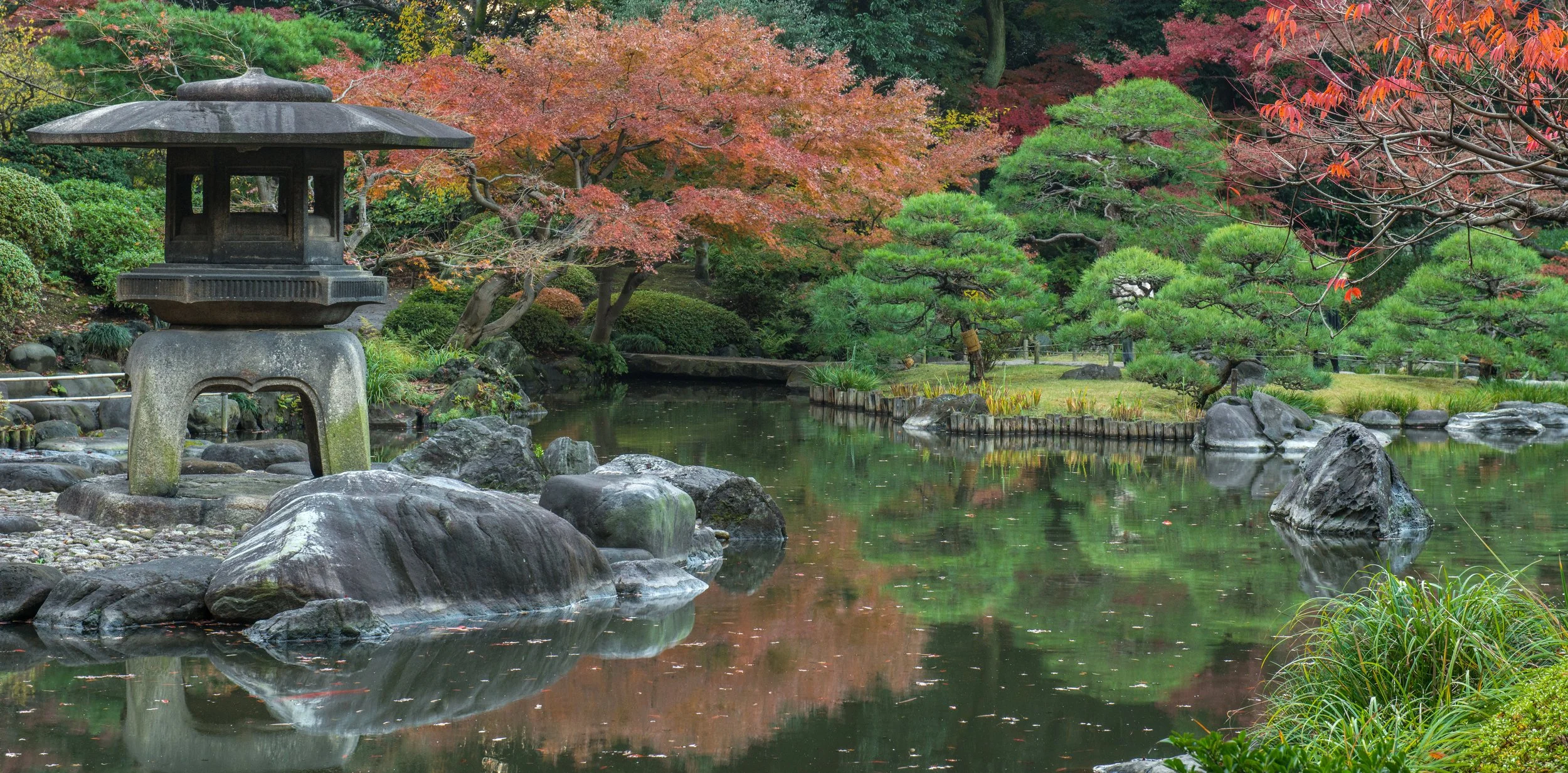
Shibui (渋い) Shibumi (渋味) Beautiful by being understated, or by being precisely what it was meant to be and not elaborated upon. A direct and simple way, without being flashy. Elegant simplicity, articulate brevity. The term is sometimes used today to describe something cool but beautifully minimalist, including technology and some consumer products. It can describe objects, colors, tastes, or experiences that appear simple but contain subtle complexity and depth. Shibui is the adjective, Shibumi is the noun. Examples in design could be a traditional Japanese kimono with subdued yet elegant patterns. In nature, imagine the scene as you walk through a dense bamboo grove, the subtle play of sunlight and shadow, the textures of the bamboo surfaces, and the gentle swaying in the breeze reveal a quiet beauty that resonates with the concept of Shibumi.
Shizen (自然) Shizen means nature or naturalness, but also the idea of creating without artifice or pretense, where genuine creative intent flows effortlessly. Ironically, the spontaneous nature of the Japanese garden which the viewer perceives is not random of accidental. This is a reminder that design is not an accident, even when we are trying to create a natural-feeling environment. It is not a raw nature as such but one with more purpose and intention. In design and presentations, you can apply shizen by crafting visuals and messages that feel effortless and authentic—avoiding forced effects or gimmicks. Use clean layouts that flow naturally, empty space that breathes, and storytelling that unfolds with clarity and simplicity. Let your work feel alive but naturally so. In speaking, our approach should feel spontaneous, and from the heart yet we achieve this with clear purpose and intention.
Yugen (幽玄) Yu means “subtle” and “Gen” means “profound.” So we can think of Yugen as a subtle, even mysterious beauty yet one beyond words. suggestion rather than revelation. A beauty that suggests more than it reveals and evokes awe, wonder, and contemplation. A Japanese garden, for example, can be said to be a collection of subtleties and symbolic elements. Rather than showing everything openly, a garden infused with Yugen feels timeless and contemplative, it captures the beauty of suggestion and absence, fostering peaceful reflection and deep emotional response. Visual designers of all kinds can surely think of many ways to imply more by not displaying the whole, that is, showing more by showing less.
The first time I was in Japan so many years ago, I witness a beautiful view from the top of a mountain in Tohoku. My Japanese friend taught me the phrase then Yūgen na keshiki. I thought it meant “nice view” but the phrase is less conversational than that and more closely means a view that has a mysterious, profound, and subtle beauty or a scene that evokes a deep emotional or spiritual response through its quiet, subtle beauty.
Datsuzoku (脱俗) Datsuzoku can mean freedom from habit or formula—an escape from daily routine or the ordinary, a transcending of the conventional. This concept reflects an intentional break from the conventional, embracing originality, freedom, and a refined sense of being beyond the ordinary. This principle describes the feeling of surprise and a bit of amazement when one realizes they can have freedom from the conventional. Professor Tierney says that the Japanese garden itself, "...made with the raw materials of nature and its success in revealing the essence of natural things to us is an ultimate surprise. Many surprises await at almost every turn in a Japanese Garden.”
Seijaku (静寂) Seijaku means tranquility or an energized calm (quite), stillness, solitude. It’s not just about silence or absence of noise; it’s a mindful presence that creates calm and peace, even in the midst of life’s chaos. In design, it could mean creating environments, things, or experiences that encourage quiet reflection and mindful awareness. These objects or spaces don’t overwhelm; they gently slow you down and ground you in the present. This is related to the feeling you may have when in a Japanese garden. The opposite feeling to one expressed by seijaku would be noise and disturbance. The question, then, is how might we bring a feeling of "active calm" and stillness to our designs outside the Zen arts?